
Listing spends is only the first half
The technique
Ask what the data can decide, not what it can display
A chart of categories is the output most trackers stop at. The same transactions, matched against card reward rules, loan rates and brand prices, answer three questions that a chart cannot: is this card right for me, is this loan priced fairly, and am I paying more than I need to at the same shops.
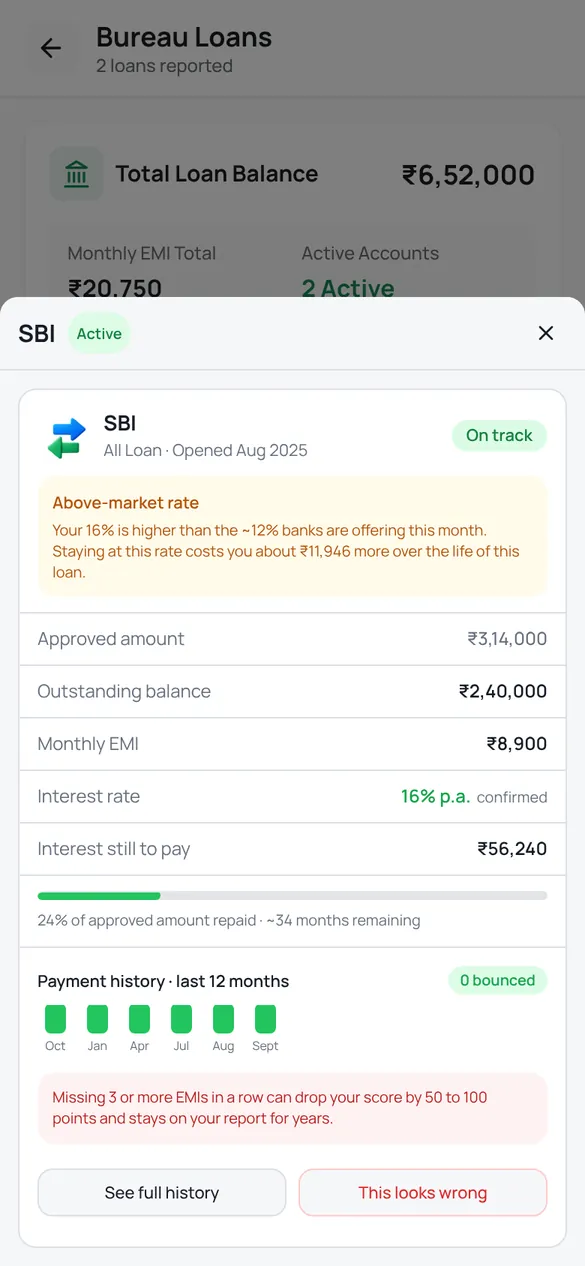
Take Kabir, a salaried professional in Bengaluru, used as a worked example on this page. His credit card carries ₹14,650 of spending a month, ₹1,75,800 a year. He has a personal loan with ₹2,40,000 outstanding at 16 percent and 34 months left. He spends about ₹6,000 a month at large brands: food delivery, groceries, shopping and rides.
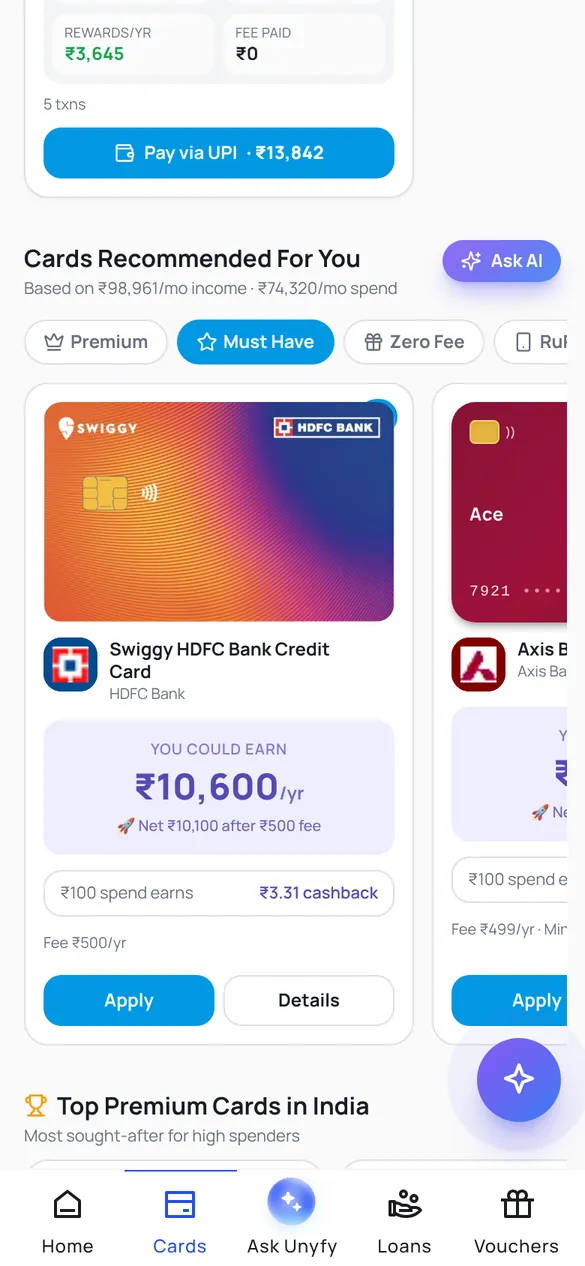
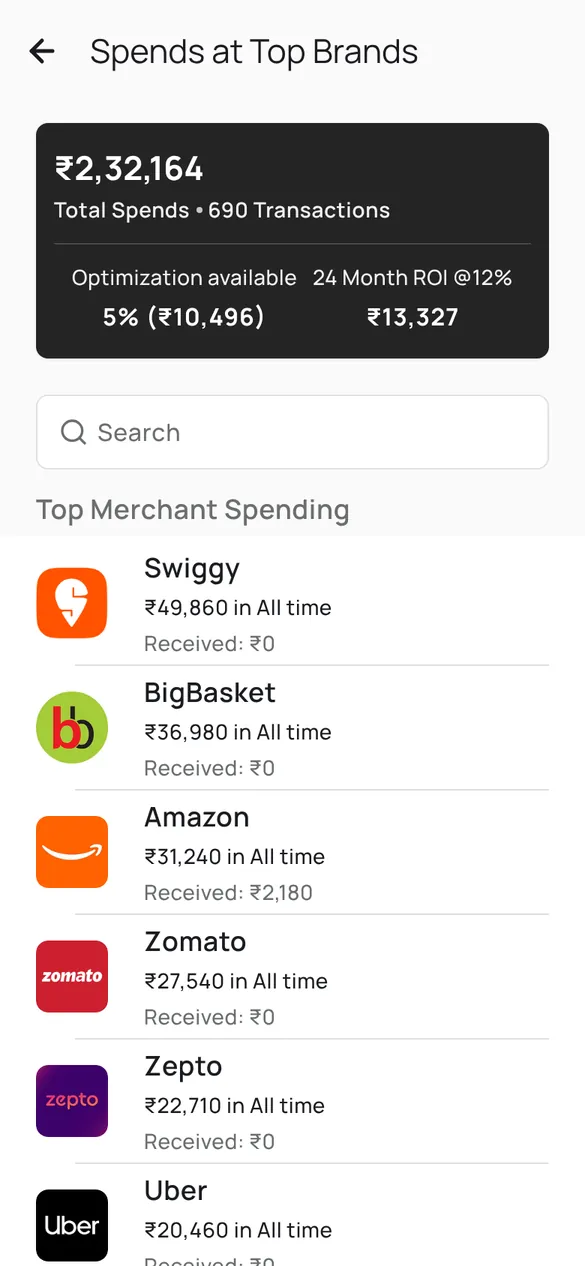
Any tracker that sees his accounts can tell him he spent ₹14,650 on the card last month. That is where most stop. The same data, read one step further, says three more things. His card earns ₹1,578 a year in rewards, and a card matched to his spending would earn ₹6,238 after its fee, ₹4,660 more. His loan will cost ₹15,772 more in interest than the same loan at 12 percent, ₹10,108 more even after the cost of switching. And buying his usual brands through discounted vouchers at a typical 7.5 percent would keep ₹5,400 a year.
That is ₹10,060 a year from the card and the brands, and ₹10,108 over the remaining life of the loan, none of it from spending less. The figures are illustrative, built on round numbers so they can be checked line by line. The method is the point: each of the three needs the full picture of what you spend, which is why it belongs in the same place as the tracking.
- Card rewards he earns today
- ₹1,578 a year
- Rewards on a card matched to his spending, after a ₹500 fee
- ₹6,238 a year
- Extra from the matched card
- ₹4,660 a year
- Typical voucher discount on ₹6,000 a month at brands
- ₹5,400 a year
- Card and brands together
- ₹10,060 a year
- Loan: extra interest at 16 percent vs 12 percent, after switching costs
- ₹10,108 over 34 months
Illustrative example with round figures and illustrative reward rates, not a specific card or lender. Redo each line with your own statements using the methods below.


'/%3e%3c/g%3e%3c/svg%3e)


